
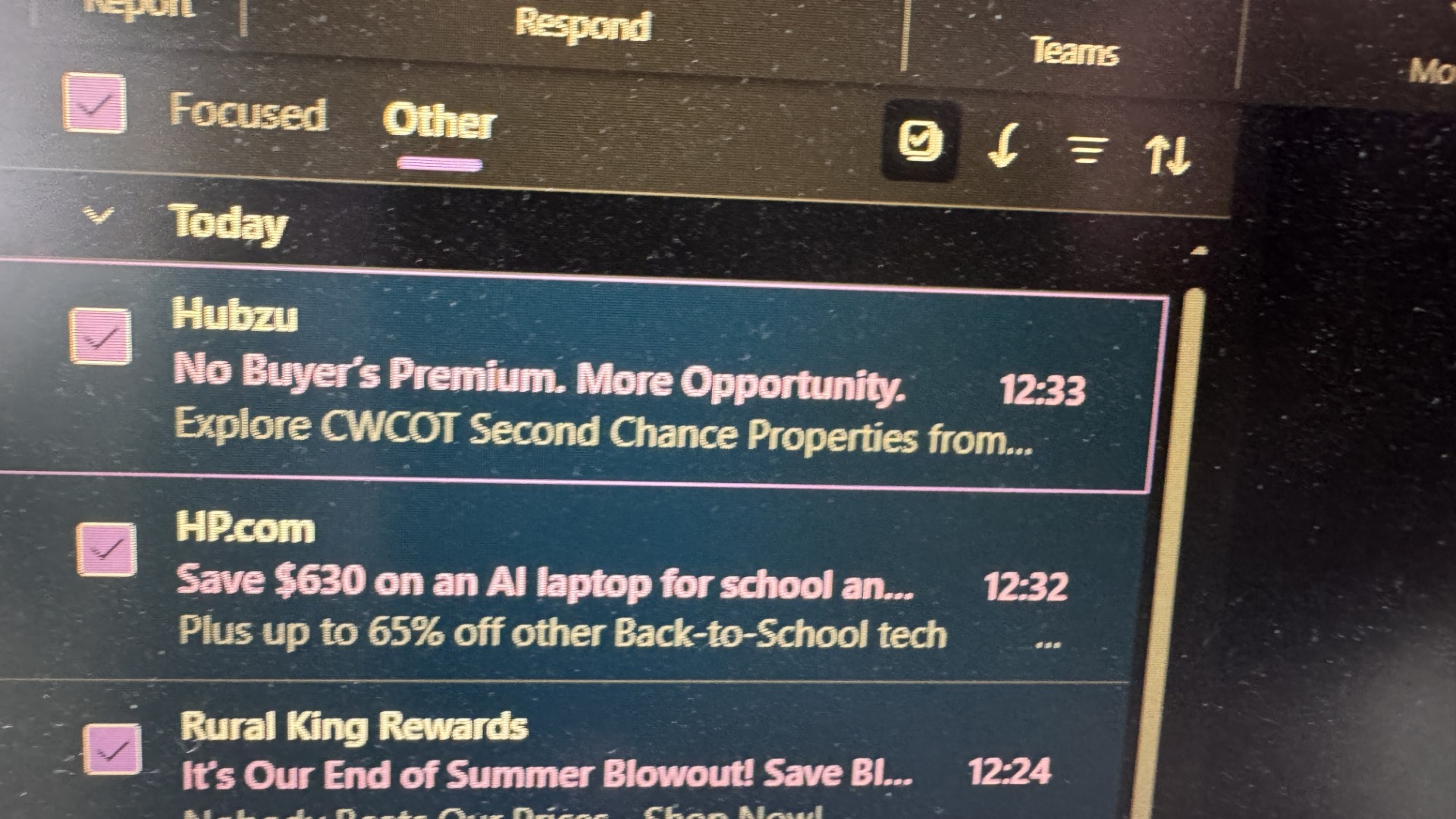
The Hubzu email showed up in my spam folder like every other day, but this time it hit the “way back time machine” in my mind.
We head back about a dozen years to a quiet night. I sat cruising online auction sites for cheap real estate up for auction. I found this property in western Ohio that had zero bids. I threw a $1,000 bid on the property for giggles and moved on down the line.
The Back Story
Fast forward a few days, and I get an email from Hubzu stating that the seller has agreed to my offer and will complete the contract. I was a bit confused and suddenly realized it was that little house in western Ohio I had bid $1,000 on a few days earlier. With closing and auction fees, I remember the price being around $1,600 all in for the property.
I loaded up one morning and did the roughly two-hour drive to this little crossroad “community” somewhere near Brock, Ohio. I remember Brock because I drove by the Annie Oakley gravesite on my way home. However, the house wasn’t as bad as I expected, but there were a lot of questions about this one.
- Why had it gone through numerous foreclosure auctions with no successful buyers?
- There was a house trailer on the rear of the lot. But it wasn’t listed anywhere on the sales agreement or listing.
- The house was obviously full of stuff — you could see it against the windows — from the street, so was someone living in the unit? Some basic background searches led me to believe that the primary owner was deceased. If that was true, who was living in the house(s)?
I drove home that afternoon with lots of thoughts running through my head regarding this property. Purchasing it for only $1600 would give me lots of options for renovations. However, it was still early enough after the Great Recession that we weren’t back on stable ground yet.
How Did it Get Away?
Bluntly put, I let the “concerns” get in the way of the possibilities. Back to the story, quick.
While I was driving back from the visit, the title company sent me the cost to close and what they needed from me to complete the transaction. The next morning, bright and early, I visited Richwood Bank and got a cashier’s check for the exact amount they requested and had it in the glove box ready to go.
That’s when I decided it was time to let my wife in on what was happening. I’d just pulled $1,600 from our joint savings account, so I had some explaining to do. I never meant to keep her in the dark, but it all happened so fast, and I was honestly expecting to get the kidding notification somewhere along the line.
That was when the discussion started to go downhill on me. The reality was that this was a good opportunity, but it was also a long way from home, and I didn’t have the support system I did in Delaware.
- I talked to a good friend and fellow agent, Collin Howard of Howard Auctions, about auctioning anything we found in the house. But he wasn’t interested in going that far until I had an idea that there was anything of value.
- I talked to my contractors, and the consensus was that they weren’t interested in taking on this project from that far away. So not only would I have to be the general contractor, but it appeared I would have to do a lot of the overall contracting work myself. And not knowing the actual state of the property, this was becoming a bit daunting to me.
- And the biggest issue was the opportunity cost of this project. As I said, this was right after the recession, and if I’m spending 1-2 days a week working on this property, that means 1-2 days not doing real estate.
I remember having the “come to Jesus” meeting with Gretchen where I tore up the cashier’s check and decided to pass on the opportunity.
Looking Back, I Really Screwed Up: Here’s How
There are days when I kick myself for passing on this deal. I had a golden goose in my hand and decided to pass on it, even after knowing it was a golden goose.
Looking back, knowing what I know now, I would have purchased the property. Not because I love the idea of defying my wife. However, it is because I would have had a much better argument for her when we talked about the options for that property.
At that point in my real estate career — all residential — I saw two options for the property.
- Rehab and Sell.
- Rehab and Hold.
They both ran along the same premise and faced two big challenges. Essentially, I would rehab the property to a certain level and then either sell it or rent it. In theory, netting more money than I spent and everyone goes home happy. The first challenge was the distance. Spending 4-5 hours on the road makes traveling back and forth a challenge so you have to count on out-of-network contractors and can’t do as much myself. The second is the fact that I was not ablle to view the property to know how much work would go into the property. So the idea of creating a budget would not be available until after the purchase closed and proper evictions took place.
What Were My Real Options?
While those are great options. After getting involved with the Ohio Commercial Real Estate Exchangors and attending national events at the exchanging level I began to see my limiting beliefs. I had been looking at the situation from a classic buy/sell mentality. I wasn’t taking into account the counseling model that I have since learned.
My other options included a lot of things that I could have done from hundreds of miles away and never even set foot on the property. Among the options included:
- Sell the Contract. This is the process where I have an agreement with a buyer and essentially sell the contract to another person for a finder’s fee. Commonly known as wholesaling, this was probably my least likely option. Since it was a bank-owned property using a generic bank contract, it probably had a no-assumption clause. But I didn’t even know to look. This would be the quickest way to make a buck, but it also has limited buyers since they are unable to view the property before purchase.
- Purchase the Property and Sell It Sight Unseen. This is very similar to the wholesale option; however, I would have taken ownership of the property and then sold it to a third party quickly after the closing. The biggest difference between this one and the first is timing and, in some cases, liability. The liability would be that if we are in title and something happens on the property, we are on the hook.
- Clean the Property and Sell. My mind works in finished tasks, so the idea of cleaning the property and then not doing the renovation didn’t even enter my mind. The biggest reason, in my opinion, this property hadn’t sold was that on a drive-by, it looked like a hoarder house. So by spending a few thousand dollars, we could remove that obstacle for the buyer. Now the downside is that we could clean the house and learn that it needs to be essentially torn down, and we just spent thousands of dollars to make nothing back.
- Trade Partial Ownership for Work. This is my favorite and 100% an exchangor concept. I would find a local contractor that can do the rehab and is willing to take on the job for partial ownership of the property. If the property’s after-repair value was $50,000 and we estimated repair costs to be $15,000. This would be a quick $10,000 win for the contractor. While this is my favorite, it would also probably be the least desired by some people. Since the contractor would have to be able to front the money they are using to rehab the property.
This is a long post on the one that got away, not to scare you, Rather my goal with this was to remind you that cookie cutter responses only fit cookie cutter properties. When you need something done differently you need to look outside the box to find the best answers.
Discover more from The Exchangors, llc
Subscribe to get the latest posts sent to your email.
